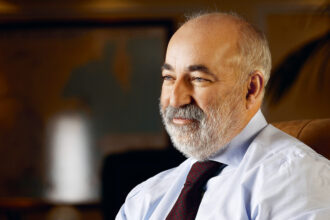
Having spent nearly a decade at Singapore’s sovereign wealth fund Temasek Holdings, specializing in the markets of India, Africa, and Russia, the founder and managing partner of India’s Kedaara Capital, Manish Kejriwal, today focuses primarily on his home country. However, this does not prevent him from noticing investment opportunities in other BRICS states that are making tremendous efforts to improve their image in the eyes of international investors.
Sovereign investment funds are a relatively new phenomenon, but they are playing an increasingly prominent role on the global economic stage. Could you explain what exactly their purpose is?
In general, sovereign funds can be divided into two types. The first are funds that are primarily intended to maximize profits for their shareholders (in most cases, the state) from placing funds received as a result of the current budget surplus. The state allocates capital to sovereign funds in those years when such a surplus exists, expecting that managers will be able to obtain high returns when investing it in the interests of future generations. The goal of funds of this type is to minimize the negative consequences of changes in the economic situation for their countries, as well as to provide future generations with higher financial returns from revenues obtained from trading raw materials. Many of these states are heavily dependent on the extraction and export of raw materials, such as oil. Receiving significant revenues from its sale, which significantly exceed their budget expenditures, some of these countries direct the “surpluses” to form substantial capital reserves, which are then productively used for the benefit of the country—especially in years when resources are unavailable or in short supply.
Funds of the second type mainly perform strategic tasks of the country or its ruler. Such funds seek to acquire controlling stakes in assets that they consider “strategic” or that they “simply would like to own.” For example, stakes in certain European retail companies or niche investment banks. They are more active by nature and seek to directly control their investments, while funds of the first type usually choose passive investment strategies.

There are many examples of such institutions. There are Norwegian and Chinese funds (for example, the China Investment Corporation, CIC), placing “excess” capitals transferred by its government with the aim of obtaining investment income for future generations. In China, there are other funds specifically designed to help Chinese companies buy assets abroad—say, mining enterprises in Africa or stakes in foreign banks. These funds may not bring quick financial returns to their shareholders, but they serve to satisfy longer-term strategic goals.
What type of sovereign funds is most widespread?
Most sovereign funds belong to the first type, their main task is to maximize return on investment. The primary question that their managers have to solve is the structure of the portfolio being created. In particular, what share of the capital under management should be invested in debt obligations, and how much in stocks. Invest in the domestic market or abroad. If it comes to foreign assets—should a balanced portfolio be formed, or include only developed markets, or, conversely, the most dynamically growing ones, and so on. If the CEO and managers of sovereign funds strive to maximize the profitability of their portfolios, they have to rack their brains over all these questions.
Do you believe that such funds, regardless of their type, can work truly effectively, given that they are not absolutely independent?
I think that in reality, efficiency largely depends on the specific fund. The most effective are those that have a clearly defined mandate and whose board of directors gives clear strategic guidance to their managers. It is also good if the managers are good professionals, and their compensation is tied to achieving the best results by them.

The most important thing, in my opinion, is what management team the fund owners manage to assemble and how their compensation system is structured over a long period of time. I have not conducted a special study, but I will still venture to assert that the more professional and stronger the team, and the more independent it is from the fund owner, the higher results it achieves. Independent investment teams with a longer planning horizon show higher results over a longer time period compared to those who have to run to the fund owners regarding every investment decision.
Take Canadian pension funds as an example. They have some of the most professional and best teams that can be found in the industry, whose compensation system corresponds to the highest standards in the private sector.
Therefore, summing up once again, my opinion is this: the results of a sovereign fund depend on two circumstances. The first is the quality of management and the degree of independence of its managers from its shareholders. The second is the level of the management team and their compensation system—does their pay correspond to market rates, which allows funds to successfully compete for the best professionals with private financial institutions. So, the more independent and professional the team managing the fund, the higher the results it shows.

What then is the role of owners or shareholders?
The role of shareholders is to determine the strategic goals and mandate of the fund. They could set the managers the framework of what is allowed and what is not. But after that, they should, I emphasize this again, allow the fund’s management to make independent investment decisions. This is how the highest level of efficiency is achieved. It is ineffective when managers are really forced to contact the owner for approval of every investment or personnel decision.
In Focus – BRICS
There is a feeling that investors have begun to look warily at BRICS – both as a concept and as a priority direction for investing their funds. What is this related to?
I do not think this is a long-term trend. The economies of BRICS and their markets are cyclical by nature, just like the markets and economies of developed countries. Investors have so far seen only one full cycle (2003–2012), many of them invested at the downturn and suffered losses. For example, of approximately $70 billion invested by private equity funds in India from 2000 to 2012, more than 70% was invested in just three years (from 2006 to 2008), and these were years of bad “vintage,” when investment returns were low. Then investors got into a similar situation in other BRICS countries. For example, in Russia and China. All this made them a little more cautious about investing money in these markets.
However, none of the fundamental drivers of BRICS has disappeared. These countries remain large centers of consumer demand, and their economies still demonstrate high growth rates. So I am confident that the volume of foreign direct investment (FDI) in India and all BRICS economies will recover in the next three years.
It should be borne in mind that, in addition, governments are beginning to carry out various reforms to increase the investment attractiveness of their countries. Take India as an example. In recent months, the local cabinet has taken a number of measures to return investors. For example, restrictions on the size of FDI in a number of sectors of the Indian economy were reduced, including insurance, retail trade, and the aviation industry, as well as many norms and rules of regulation were improved.
In one of your recent interviews, you literally said that the world does not revolve around India. What was meant?
Partly it was a joke. I wanted to say that no country can take it for granted that foreign investors will run to them themselves, and India is no exception.
International and global investors go where they expect to get the highest profit, adjusted for country risks. India is a very attractive and large, dynamically growing market, but its attractiveness is leveled by a significant level of risk in terms of the regulatory environment and an ambiguous level of corporate governance. Therefore, neither the authorities nor the private sector should rely on the fact that the arrival of international investors is guaranteed to them as a given, but should try to establish clear rules of the game in the field of regulation and ensure a high level of corporate governance. Without this, it is impossible to do without if India wants to attract foreign investments in the volume necessary for it to fully realize its potential.
Indian authorities, regulators, and the private sector cannot ignore these challenges. This is quite consistent with your previous question. More than a billion people live in India. However, a good investment climate and quality regulation are no less important for attracting foreign capital to the country than the presence of a capacious and attractive domestic market.

I still believe that India remains a very, very investment-attractive country, since it retains all the internal prerequisites for growth, and investors coming here can potentially count on good profits. However, India has a long way to go to minimize the risks inherent in it. First of all, in the field of regulation and infrastructure.
Russia today faces roughly the same set of problems as India. Taking into account your vast experience of investing in the Russian market, how do you assess its attractiveness? What would you advise the Russian authorities to improve the investment climate?
Before I start answering, promise me that no matter what I say, this will not be a reason to refuse me a Russian visa.
I promise!
If we speak seriously, from positive positions, I would like to recall investors who assessed Russia’s potential in the middle of the last decade (somewhere in 2004–2006). Then they saw a country that was gradually opening up to the outside world, and expected a significant influx of investments, especially in areas such as the financial sector, telecommunications, retail trade, and a number of others. Comparing the potential and wealth of the country, they saw huge opportunities in it for themselves, sought to bring financial instruments and products here to satisfy the needs of both corporate and retail clients. Many global investors were very inspired by Russian investment opportunities then.
What happened then? How did their attitude change?
As an international investor considering Russia as a potential investment object, I see two big problems.
The first is demography, which today works against Russia, unlike, for example, India and China. The latter are countries with rapidly growing populations. If you look at the Indian age pyramid, you can see that the majority of Indians are still young people under 30. In Russia, the demographic situation has radically changed, and the average age of its population has significantly increased.
In addition, the reality is that the Russian population is decreasing annually. This is radically different from what we see in other BRICS countries, which receive an advantage thanks to their “demographic dividend.” In many of them, population growth stimulates GDP growth. Global investors today are trying to understand what economic growth rates Russia will be able to sustainably maintain. In essence, investors are concerned with the answer to the question: if the country’s population is decreasing in absolute terms, will it be able to continue to grow, or in the coming years will demand begin to fall, despite an increase in the overall level of people’s well-being. In this sense, Russia is in a disadvantageous position against the background of other BRICS countries.
The second big problem is that investors still have a feeling of the presence of an “invisible hand” influencing decision-making in Russia. It is especially developed among large multinational companies that have experienced various difficulties with their Russian assets. There is an idea that a number of large business structures have a significant advantage due to their proximity to power, and their interests will always be protected, even to the detriment of foreign investors. Perhaps this is nothing more than a feeling, but in our world feelings become reality—and international invest
[Link to related BRICS article]