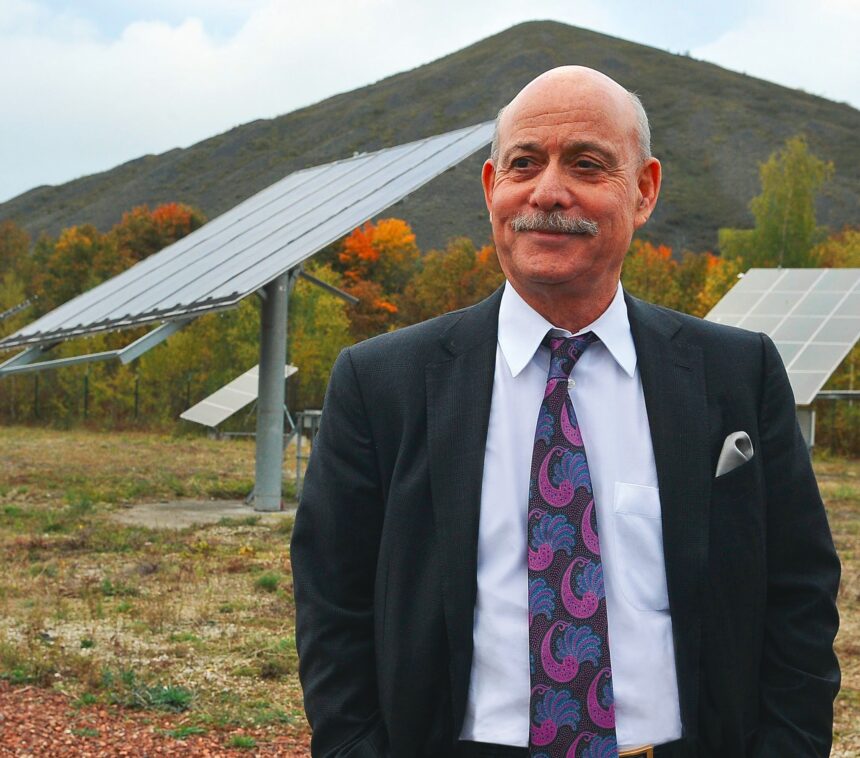
The Third Industrial Revolution represents a critical shift needed to address the escalating threat of global climate change. Humanity must rapidly adopt this paradigm to not only secure survival for most species on Earth but also to inject a fresh “green” momentum into a stagnating global economy. Renowned futurist Jeremy Rifkin, the architect of the Third Industrial Revolution concept, outlines a rescue plan for the planet centered on this idea. He shared these insights during the “Open Innovations” forum in Moscow.
Global gross domestic product is declining worldwide due to a 20-year productivity slump. This has led to high unemployment rates, particularly among youth, fueling an ongoing economic crisis. Experts predict 25 years of extremely low growth ahead.
This recession has amplified a far graver issue: persistent climate change driven by massive greenhouse gas emissions from the industrial revolutions of the 19th and 20th centuries.
The real terror of climate change lies in disrupting Earth’s water cycle. We experience heavier snowy winters, intense spring and autumn floods, and unprecedented summer droughts. What does this indicate? Ecosystems are failing to adapt to these dramatic moisture shifts. They are dying off. Scientists warn that Earth is undergoing its sixth mass extinction event right now, in real time. Over the next 80 years, we could lose about 50% of all life forms on this fragile oasis in the universe. This process is uncontrollable, and our own human species faces extinction risks too.

It’s time for decisive action. The world needs a fundamentally new vision for economic development, paired with a bold action plan to implement it within 30 years. This could be our last hope to navigate this razor-thin path to survival.
To grasp this massive economic paradigm shift, consider that our world has seen at least seven such transformations. At key moments, three foundational technologies converge to form a universal platform: new communication methods, new energy sources, and new transportation systems. Together, they reshape management, power supply, and transport across value creation stages.
This happened in the 19th century with Britain’s First Industrial Revolution. The telegraph converged with cheap coal, powering the steam engine, which eventually drove locomotives on rails.
Similarly, the Second Industrial Revolution in the 20th century was led by the United States. Centralized electricity, telephones, radios, and televisions merged with cheap Texas oil. Borrowing Germany’s internal combustion engine, America mobilized society with cars, trucks, and buses.
We navigated the 20th century this way, as the world embraced this Second Industrial Revolution. Its peak came in July 2008, when Brent crude oil hit a record $147 per barrel, halting global activity. This was an economic earthquake, with the financial market crash two months later as its aftershock.

When oil prices exceed $95 per barrel, everything becomes more expensive. Fossil fuels underpin production—from fertilizers and building materials to pharmaceuticals, synthetic fibers, energy, transport, heat, and light. At around $120 per barrel, purchasing power evaporates, halting growth. Economies expand, prices rise, then boom—contraction follows.
We remain trapped in these cycles with no escape. We’re witnessing the slow sunset of the Second Industrial Revolution, reliant on centralized telecommunications, fossil fuels, nuclear power, and internal combustion engines for land, sea, and air transport. This fade-out may last another half-century. Now is the moment for a new concept to emerge.
Angela’s Vision
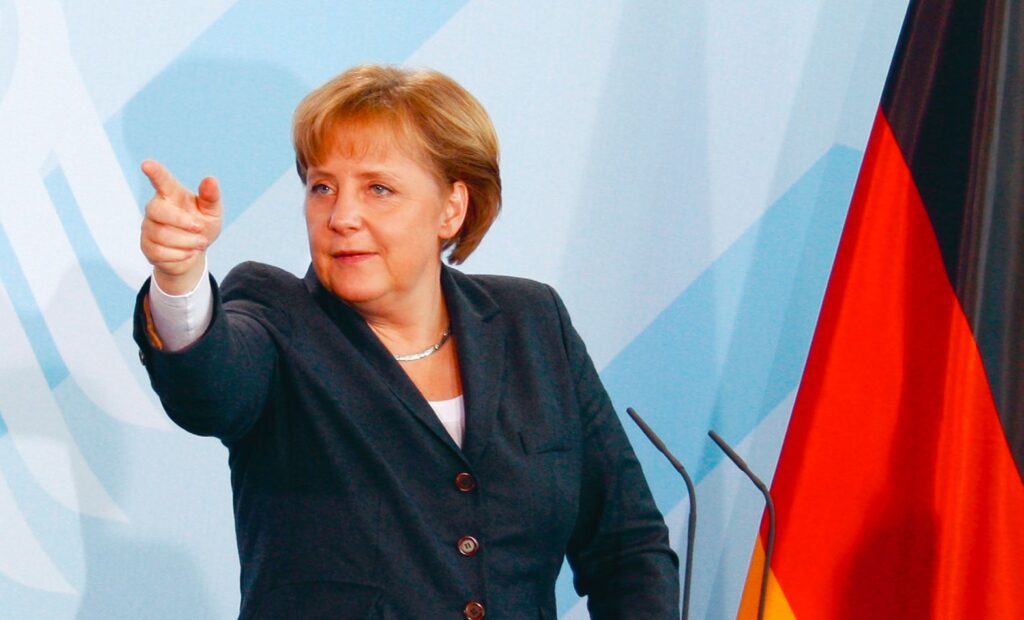
When Angela Merkel became Germany’s chancellor, she invited me to Berlin to explore ways to accelerate national economic growth. My first question was: “Madam Chancellor, how can growth occur if your businesses operate on the Second Industrial Revolution’s infrastructure platform? Until that’s changed, productivity can’t increase, as this platform peaked in the early 1990s.”

Productivity hinges on three factors. First, capital for advanced machinery. Second, a skilled workforce. Previously, we thought these sufficed, but they account for only 14% of total productivity. The third factor—aggregate efficiency—handles the remaining 86%. It measures the ratio of potential to useful work at each value creation stage.
Daily, we extract energy from nature—rare earths for smartphones, ores for materials, or fossil fuels. At every step, we convert, store, transport, produce, consume, and recycle. This is the value chain. Energy is spent advancing goods or services, but losses occur—known as entropy or heat waste. For instance, a predator gains only about 10% of its prey’s energy; the rest dissipates in pursuit, consumption, and metabolism. Thus, aggregate efficiency here is just 10%.
Societal processes mirror this. I conveyed this to the chancellor, noting that in 1903, at the U.S. Second Industrial Revolution’s start, aggregate efficiency was 3%. By the 1990s, it peaked at 13% in the U.S. and a record 20% in Japan. No progress since. Reforms in markets, labor, or taxes, or innovations like Silicon Valleys, won’t help if stuck on the old platform—20% efficiency caps 86% of productivity.
During that visit, I presented the emerging Third Industrial Revolution: a new convergence of communication, energy, and transport. Ultimately, Merkel said: “Mr. Rifkin, Germany will follow the vision you’ve outlined.”
Under Merkel’s decade-long leadership, Germany transformed its power sector. Today, about 30% of electricity is renewable. In five years, solar and wind will reach 40%, and in 25 years, 100%.
Grand Revolution
To understand the Third Industrial Revolution’s platform, start with the internet and digitization. The communication internet, mass-adopted 25 years ago, has matured. Nearly everyone carries a smartphone. Now, it integrates with the digital renewable energy internet and GPS-automated systems, soon including self-driving transport and logistics.
These three internets form a super-internet on the Internet of Things platform. We embed sensors in every device, machine, and appliance. They monitor crop growth on farms, factories, warehouses, and distribution centers. We have smart homes and smart transport, all collecting and transmitting big data.
Processing this data in communication and transport internets boosts aggregate efficiency and productivity, managing energy and economic activity. By 2030, everything connects with 100 trillion sensors everywhere. Essentially, we’re building humanity’s external central nervous system—an outer brain.
This holds immense potential, democratizing economic life. Anyone with a cheap mobile phone and tech can access a transparent global economy view. Even big firms lacked such big data before. It levels opportunities and rules: we all know what everyone knows.
It also enables direct peer-to-peer interactions via the internet, eliminating middlemen. We bypass vertically integrated companies that pulled us upward. We can think as one global family, viewing each person as part of it. This is total connectivity.
Funds for smart energy exist. Europe, China, Russia—all spend tens of billions annually on infrastructure. The real challenge is prioritizing investments wisely.
For more on Third Industrial Revolution impacts in BRICS contexts, [Link to related BRICS article]. Explore global economic strategies via IMF on climate change solutions. Learn about renewable energy innovations from OECD on green economy growth.
In conclusion, embracing the Third Industrial Revolution offers pathways to combat climate change while revitalizing economic growth through renewable energy and digital infrastructure.