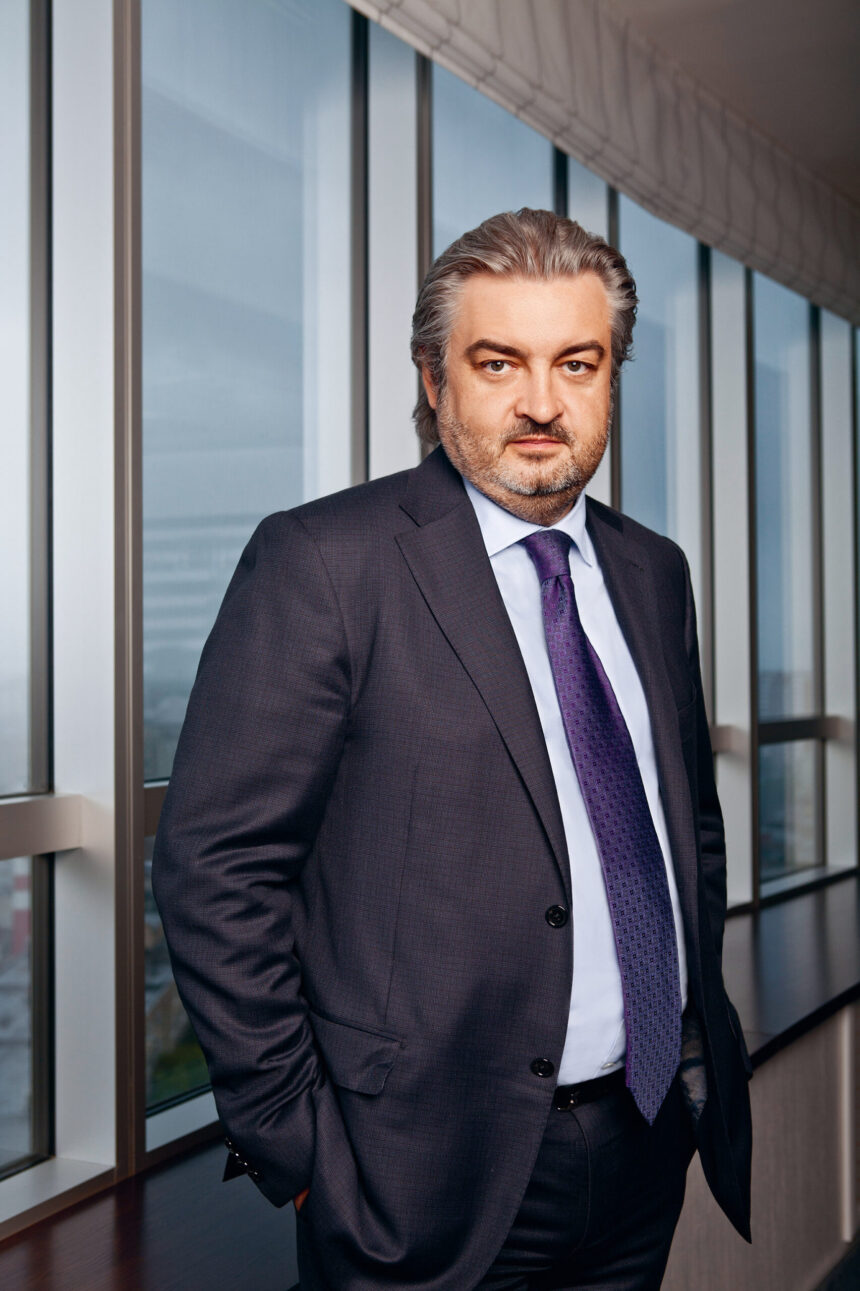
In spring 2016, a new type of financial organization appeared in Russia. Owned by VTB Group, Leto Bank was relaunched with the participation of Russian Post and renamed Post Bank. The plans include creating a large regional network to bring banking services to small towns and villages. The logic of this super-ambitious project was explained by the president and chairman of the board of Post Bank, Dmitry Rudenko.
The Russia Post Bank development showcases innovative postal banking model in BRICS nations, enhancing financial inclusion Russia.
How Much Does the Name Reflect the Essence of the Project?
Of course, it reflects it, otherwise our bank wouldn’t be called Post Bank. If you look at postal banks in other countries, they are usually called that. Sometimes one word is added – German Postal Bank or Japanese Postal Bank – but the essence doesn’t change. There are rare cases where a postal bank has a different name, like Kiwibank in New Zealand. But that probably depends on local history.
It’s clear that the postal brand exists in some countries for hundreds of years. This is a very old service. Therefore, a person intuitively perceives the post office (physical, not electronic) as something infrastructural, stable, large, and accessible everywhere. That’s the first reason why post office. The second is a consequence of the capital structure. The post office, like in all other similar banks, is our shareholder. We could have been creative and come up with a different name, but this is a matter of expediency: to promote a new brand and create its content or to use the fame of Russian Post. We chose the second path.

Impulse for Initiatives from the Post Office Itself
Yes, from it. There are several ways to create a postal bank, whose essence lies in nothing other than banking the flow of customers. We go to the post office, receive and send parcels, make money transfers, can pay some utility bills (and that’s already a financial service), but we can’t open a deposit or get a loan because for that the post office needs a banking license. The obvious solution is to obtain such a license. In partnership, by creating a completely new structure or allocating a financial department from the post office.
In countries where the postal license allows implementing a significant number of banking products, sometimes a new brand is created. There’s the post office, and there’s the financial services of the post office. They can be called a quasi-bank. In reality, it’s the same post office, just with a separate brand. This is not frequent, but it happens.
The second case is a post office with a financial services department that has developed well but has reached its ceiling. Further, the post office can go to the National Bank, obtain a license, and turn its department into a separate bank, that is, build it from scratch. This path is the most common.
But there’s another option. The post office also realizes that it’s time to get additional income from banking the customer flow and starts looking for a partner. The search can be done in different ways, sometimes it’s a joint venture with a banking group, as in our case. Sometimes it’s a completely different structure – a virtual JV, in Russia there are such in other industries, but in the world there are many more. In fact, it’s outsourcing of the banking license, services, products, while the brand and distribution remain with the post office. For example, in Brazil, for many years there was a partnership between the local post office and the bank Bradesco, but after some time a new tender was held, and now the operator is Banco do Brasil. But this, I repeat, is a virtual JV, promoting banking services under the post office brand.
In our case, Russian Post bought half of the commercial bank from VTB Group with real employees and finances. Russian Post is a shareholder, and if there are dividends, it will receive them. This model gives the only chance for the post office and the country as a whole to quickly create an operating, and moreover efficient, bank. If you decide to obtain a banking license without proper expertise, build an IT system, hire people, write a strategy, develop products, bump into issues in the first three years (there are no banks profitable from the first day), and then expand this system, then consider that 10–15 years will be spent to reach stable operation that brings profit.

Large banks are now talking about reducing the network; it’s inefficient, unprofitable. And that’s true. It’s impossible to cover Russia with such a service as a postal bank in a classic, simple way. And now the stars have aligned: a team has appeared that thinks technologically, in terms of not classic banking, but light retail with a banking license. On the other hand, management of the post office has appeared that understands the situation well, wants to reform it, put it in order, polish it a bit, and improve the image.
In principle, it’s like that in any business. You can’t just invest money and produce excellent cars. You’ll have to build a factory, find engineers, suppliers, do marketing and service – that’s years of work. A bank is no less complex a business. Therefore, the most reasonable thing is to find a strong partner with competencies and try to create a synergistic project in which the post office flow, its network, and customer loyalty combine with technologies, experience, and loyalty to the brand of the banking group. This way of launching postal banks has recently become the most popular in the world.
How Long-Term Stable is This Structure?
I’m absolutely sure that a system where there’s room for personal communication between the client and the employee is stable. Humanity has conducted many experiments excluding human interaction in sales and service. Nowhere has it worked fully.
Yes, this is perfectly applicable to routine microtransactions, for example, topping up a phone balance. But if I place a deposit, sometimes I want to see where I’m placing it. Three clicks on the internet is fast, but it doesn’t answer all my questions. Back in the 1970s, they tried to make automated banking branches – completely without people. It turned out that such branches can’t sell new services and products. This is overlaid with the specific Russian factor. A huge country with many regions where there are no banks at all, only post offices. How do people there save money, pay for utilities, receive pensions? Only Post Bank can offer them something. In my opinion, the future is for a hybrid service model, technological, mobile, but not completely excluding live communication.

Now about “depletion.” Let’s turn to world experience. In Japan, the postal bank has been operating for over 140 years. If we follow the logic of the question, then in the last 50 years the customer flow should have almost stopped. However, this didn’t happen. And if we talk about the fact that banks will no longer need a significant part of their infrastructure and physical branches in the future, then this is rather a question of what the bank of the future should look like. And this future will affect not only postal banks.
Creation of Postal Bank in Russia
The necessity of creating a postal bank has ripened long ago, but some important details were missing. In my opinion, there wasn’t such an adequate and reasonable post office team that would clearly focus on this task, determine ways to solve it for itself, and choose, as I think, the best one. There also wasn’t a team from the banking side that would understand how to quickly saturate dozens of thousands of branches with the necessary products without going bankrupt, while maintaining control.
All the attempts I saw boiled down to replicating a commercial bank inside the post office. In my opinion, this is a path to nowhere. Large banks now say that the network needs to be reduced; it’s inefficient, unprofitable. And that’s true. It’s impossible to cover Russia with such a service as a postal bank in a classic, simple way. And now the stars have aligned: a team has appeared that thinks technologically, in terms of not classic banking, but light retail with a banking license. On the other hand, management of the post office has appeared that understands the situation well, wants to reform it, put it in order, polish it a bit, and improve the image.
Demand and Timing
I’m sure we’re lagging behind; we could have done it faster, but all components were needed for that. And demand – banking retail – is life; it will be as long as there are money. Our model must account for current demand, expand, and if necessary, contract, doing this without costs.
Successful Postal Bank Models
Japan is an interesting case; not only is it the world’s largest deposit bank, it’s also conceptually similar to us. Here the same idea of a unified front line – postal and banking services side by side, banking just highlighted in another color (green for them, red for us) within the postal line, the same idea of cash processing through ATMs. They have recycling (with closed cash circulation) machines installed long ago, we have them too. In those client centers where bank employees work, we don’t build cash desks, don’t take on this inefficient load in terms of costs. The machine doesn’t go on vacation, doesn’t get sick, works always. The Japanese even have a network comparable to ours in scale – 24 thousand points (Post Bank in three years’ perspective – 15 thousand post office branches, in eight years’ perspective – all 42 thousand post office communication points with different bank presence formats). Plus bank points without post office, client centers of the ex-Leto Bank. If judged by sizes, the Japanese Postal Bank is the most successful bank on the post office.
Our philosophies are similar, with the only difference that we do lending, and the Japanese bank doesn’t. Otherwise, it’s the same – the bank is oriented towards providing a basic range of financial services for wide layers of the population, the same limited lineup, similar front line. And there, and with us, you can open a regular or savings account, a debit card, make a deposit.
Loans and Cards
Yes, both. We have the most various cards – with a small limit, recently launched an interesting card with a 120-day grace period, it sells well. There’s a project related to education credit, but it’s more about investing in financial literacy than business; people still need to mature to the idea that good education costs money.
Models Not Liked
We looked at France and Germany, and in both the post office influence is strong, but there are questions. It seemed to me that in France the synergy of the two structures isn’t used much. The postal bank there is an office enclosed by solid walls. People see a gray booth with the inscription “Bank.” To enter it, you need to book a day in advance by phone or internet. And why then be at the post office – you can rent any office. And the results there are not high.
In Germany, by the way, too. And the main feeling of colleagues who were there: the post office hoped that the bank would work, and the bank hoped that the post office would work, and in turn, it would just sit and manage. This is not the most convenient bank in service. We can’t repeat this mistake. Strong postal banks always paid a lot of attention to relations with post office employees on the ground. How successful we will be in this – in interaction, motivation – that’s how Post Bank will succeed as a project.
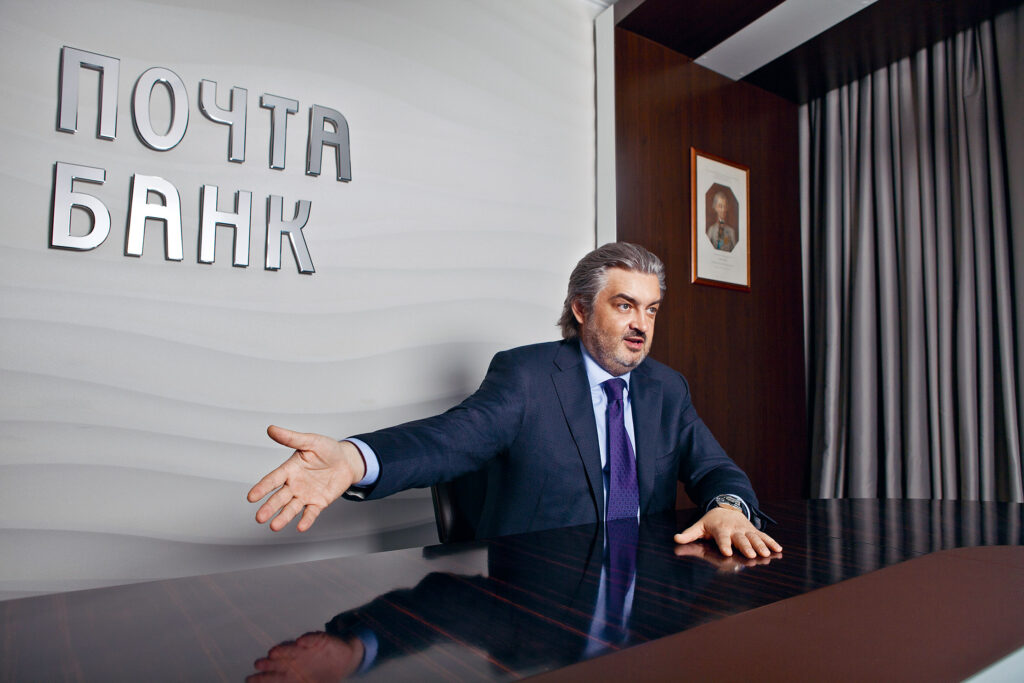
Russian Post Office Branches
The task really seems impossible; many treated it as fantasy. The model is designed for 15 thousand post office branches, that is, approximately 20 thousand sales windows inside them. We must do this in the first three years, so we’ll have to open 250 client centers per month. In April, we opened 250, and in May we will. In the Leto Bank project, two years ago we were proud of opening one branch per day – and so for a year. Now 250 per month – this is tuned technologies, knowledge, and of course ambitions and drive of the team. It’s unique; I haven’t seen such in the world.
What will happen in three years? First, I think the post office itself will reform the network; in each point there will be communication, they have a big project with Rostelecom. Nothing prevents us from expanding the network further if shareholders decide. Second, even lighter formats are possible. For example, a post office employee who, in addition to postal, can sell some of our products, accept and issue money. More of these
For more on financial inclusion Russia, explore [Link to related BRICS article].
According to IMF reports on VTB Post Bank partnership, models boost access .
In conclusion, the Russia Post Bank development advances postal banking model, fostering financial inclusion Russia, VTB Post Bank partnership, and international postal banks comparisons.