BRICS Pharmaceutical Innovation: Escape from the Heat
In the realm of BRICS pharmaceutical innovation, Vikram Punia, a Russian entrepreneur of Indian origin, literally fled the scorching heat of his native India to the chill of Russia in the early 1990s. Over two decades, he established the largest pharmaceutical company in the post-Soviet space, producing around 150 modern medicines. This includes innovative drugs for treating tuberculosis, HIV, and oncology, developed in-house. He aims not only to fully supply Russia but also to export to dozens of countries. With balanced, consistent policies and state support, he insists, Russia could build a world-class pharmaceutical industry and nurture several large-scale companies akin to big pharma within just 10-15 years.
Vikram Punia, founder and president of Pharmasintez, and chairman of the Russia-India Council, shared how to achieve this and why he firmly rejects calling such a scenario fantasy in an interview with BRICS Business Magazine.
Compulsory Licensing and Socially Significant Diseases
In 2006, Thai authorities set a precedent by compulsorily licensing Merck’s Efavirenz for HIV therapy, enabling legal generic production. A year later, Brazil followed suit. Does this indicate that the HIV situation and other socially significant diseases (SSDs) in these countries had reached a critical point, forcing governments to take drastic measures and risk straining ties with major pharma companies? How acute is the problem today, a decade later?

The actions by Thailand and Brazil were an absolute necessity. Both nations faced severe HIV issues. They couldn’t afford the prices demanded by originators, yet people needed treatment. Negotiations for price reductions failed. Ultimately, they adopted compulsory licensing, produced the drugs, and patients received care.
Notably, despite fears that such steps could complicate relations with original drug developers—potentially leading them to exit these markets, claiming theft of innovative property—nothing like that happened. In fact, it disciplined original manufacturers. In Brazil, similar incidents haven’t recurred. When the government demands price cuts, companies comply promptly. When lives are at stake, greater social responsibility is essential.
Regarding HIV and other SSDs in developing countries, including BRICS, the issue remains acute. Affordable drugs are the only salvation. If people access necessary medications, they at least won’t infect others. It’s proven that those on therapy pose no risk to partners.
Over the past decade, all BRICS countries have implemented serious measures and real programs against HIV, including providing free medications to carriers. Yet, the problem persists everywhere.
BRICS Capabilities in Drug Development

Are BRICS countries capable of independently developing and producing such medicines? Do they have the required production and scientific base?
Each BRICS nation is self-sufficient in developing key drugs. They possess ample intellectual property. Take Russia and Pharmasintez: we currently have about 300 candidate molecules in development that could become HIV treatments. We’ll see which succeed, reach clinical trials, and demonstrate antiretroviral efficacy. The issue lies elsewhere: these countries lack powerful pharma companies to invest sufficiently in R&D. This hinders progress in pharmaceutical innovations, despite abundant talent—especially in Russia, where scientists can truly develop drugs.
Collaboration with Scientists

We partner with leading institutes and universities across the country, including in Irkutsk, Novosibirsk, St. Petersburg, and Moscow. Here’s a secret: over 90% of such developments occur in academia and research institutes, not by pharma companies that portray themselves as innovators. They’re exaggerating. We support these institutes and work with them daily. We eagerly collaborate with BRICS colleagues on developments and implementations. We welcome all innovative drug developers from BRICS and beyond. We’re ready to produce, register, and ensure market access for these medicines.
Newton’s Apple – Uniting Efforts in BRICS
Could uniting BRICS efforts in innovative drug development be a solution?
Unification makes more sense for market entry of ready developments. For instance, a joint center for innovative drugs could register and license finished medicines for all BRICS countries. This would instantly create a vast market and rapid dissemination of modern drugs.
As for uniting in actual developments, real-life experience shows no objective possibility for such cooperation.
Why? One key reason is intellectual property—it can’t be communal. It’s owned by specific developers. An idea for a drug might be shared, but development can’t involve masses. It’s a small group or even one scientist. The result can’t belong to all BRICS.
Intellectual property is always the fruit of individual labor. For example, Isaac Newton formulated gravity’s law, not the UK as a whole.
Creating Modern Drugs
But creating a modern drug alone, sitting under an apple tree, is impossible. Even with a genius idea, you need scientific infrastructure and funding.
Ideas can strike anywhere—in a garden or bath. They’re irreplaceable. Projects stem from ideas, not vice versa. Sit in a high-tech building packed with equipment—will you create a new drug? Never.
Most new medicines worldwide originate in universities and institutes. Pharma companies develop few but pretend to be top innovators. All BRICS countries already have these universities—no new infrastructure needed. Only they can do this work. Gather them under one roof with a task to make an HIV drug? They won’t.
Examples exist: In 2012, seven global pharma giants—Abbott, AstraZeneca, Bayer, Eli Lilly, GlaxoSmithKline, Merck, Sanofi—partnered to accelerate tuberculosis treatments, aiming for three drugs to cure it in one month. They allocated huge funds. Where are those drugs?
It’s hard to expect pharma companies to destroy their markets by creating permanent cures. Like bees against honey.
This stereotype has no basis in reality. Recently, a hepatitis drug cures 98% of cases. Proper treatment could solve global hepatitis soon.
What will pharma companies do then? They’ll find new diseases to treat. No mafia blocks new developments—it’s nonsense. I speak as an insider pharmacist.
Thus, governments should support universities and specific scientists, not artificial organizations. For example, what results have Rosnano or Skolkovo yielded?
Too little time to judge; venture investments are long-term.
Godspeed to them. Maybe in 15 years, we’ll get super tech. But I doubt it. Support those in universities who’ve dedicated lives to problems—like virology institutes with 50-60 years of expertise. They can develop. Give a super piano to a non-player—you won’t get Rachmaninoff.
Suppose someone invents an HIV or hepatitis pill. The path from idea to pill is long. How to traverse it?
This is crucial. Among BRICS, Russia suffers most from developments not reaching markets, though it’s improving. Russia is the most innovative, thanks to Soviet legacy. Solution: Create at least 5-7 large pharma companies with $1B+ annual turnover. This provides resources for full innovation funding. It’s possible— no fantasy.
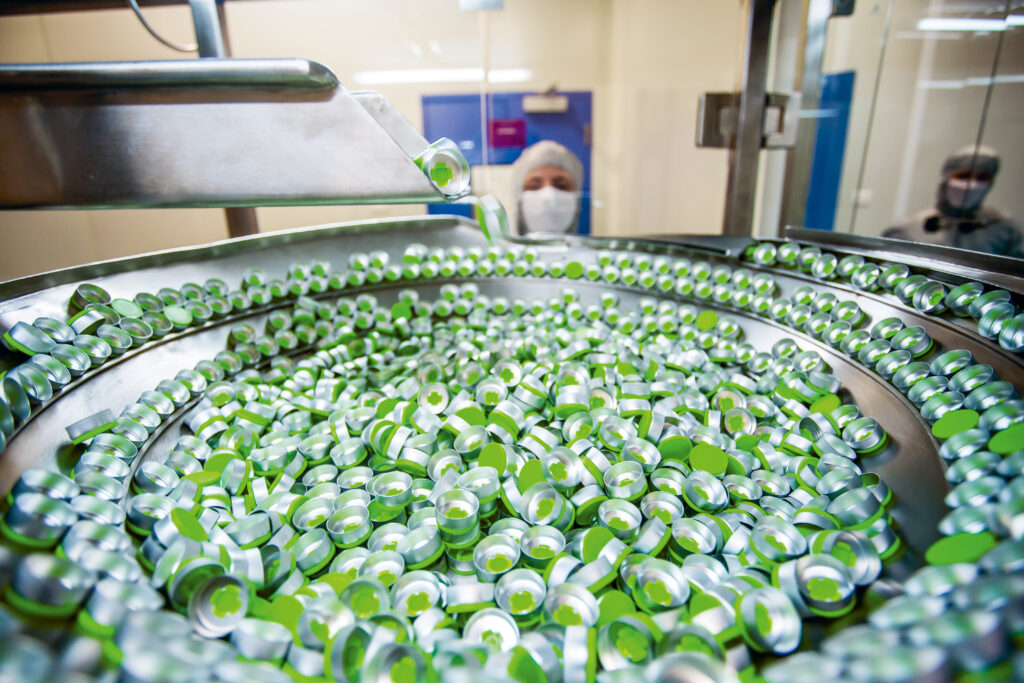
Pharmasintez, founded in 1997 in Irkutsk, leads in anti-tuberculosis, antiretroviral, and oncology drugs in Russia. AO Pharmasintez (Irkutsk) is the country’s largest anti-tuberculosis producer and the group’s main enterprise, including IST-Pharm (Ussuriysk), Bratskhimsintez (Bratsk), Pharmasintez-Tyumen (Tyumen), Pharmasintez-Nord (St. Petersburg). Total staff: about 1,500. 2016 revenue: over 12B rubles. Sterile drug forms workshop, powder filling section for injections.
Probably Destiny
Yet it sounds like fantasy…
It’s entirely real. For example, 20 years ago, I started from zero as a student at Irkutsk State Medical University. Nothing existed. We began with one Irkutsk plant producing one anti-tuberculosis drug. Now, we make about 150 drugs—all existing pharmaceutical forms. We rank first in Russia for anti-tuberculosis and antiretrovirals. Pharmasintez business today is five factories in various Russian cities. We produce drugs for tuberculosis, HIV, oncology, diabetes, cardiovascular—our specialization. We develop own innovative drugs, some in clinical trials. We have an R&D center and collaborate with top research institutes.
Rapid Growth Secrets
How did you grow so fast?
First, state help was key. Without Russian government support, nothing would’ve happened. In 2010, the Pharma-2020 strategy was adopted for domestic pharma development, localization, import substitution. We used subsidies, preferential loans, tax breaks. Second, focus on socially significant diseases with high need and state procurement. Third, our team, experience, perseverance.
From India to Russia
You came from India to Russia. Why Russia?
I’m from Punjab, India. In 1991, I came to Irkutsk for medical studies. It was USSR collapse, tough times, but I saw potential. After graduation, I stayed and started business. Probably destiny.
India-Russia Pharma Cooperation
How can India and Russia collaborate in pharma?
India is a pharma superpower, leader in generics. Russia has strong science. We can combine Indian production tech with Russian innovations. Pharmasintez already has joint projects with Indian firms.
Future Plans
Expand exports to BRICS, EurasEC, Africa, Asia. Develop new drugs. Build new factories. By 2025, aim for top-10 Russian pharma companies.
In conclusion, BRICS pharmaceutical innovation thrives through stories like Vikram Punia’s, emphasizing HIV treatment innovation, tuberculosis drugs, and BRICS collaboration for a stronger Russian pharmaceutical industry.
[Link to related BRICS article]
For more on China innovation, see IMF reports.
Learn about African investments via OECD insights.